Perspectives on Parenting with a Disability

When it comes to parenting, there aren’t very many parents with disabilities in play groups, after school groups, or even recreational groups for our children. However, there are parents with a range of disabilities in society. Sometimes people are too caught up in our limitations to realize that people with disabilities can be successful parents too. The issues faced by parents with disabilities aren’t really known by mainstream society. We are still seen as people who are incapable of parenting because of our limitations. This misconception doesn’t stop people with disabilities from dreaming and planning to become parents.

Social media posts exist that tell parents to teach their children to be accepting of the kids with disabilities in their surroundings. The first ingredient is for the fear of disability to be erased in adults. People with disabilities are still seen as people who are constantly ill or can’t take care of themselves at all. There is the misconception that it is too cumbersome to afford us the accommodations to meet our basic needs.  People believe we live a miserable existence and there is little positivity that surrounds us. This may sound uncomfortable or difficult because some people don’t know where to start. The solution to overcoming this myth is to find out more information from reliable sources on disability. This should be the starting point to unveiling the unknown of what it is to really live with a disability. Unfortunately, society allows different forms of media to shape people’s frame of reference without having real life experiences to draw upon.

The reality is that people with disabilities are productive members of society who deserve the chance to not be judged solely on appearance. Parents with disabilities are still left in the shadows or criticized for their choice to become a parent in the first place. There are resources, support and pieces of assistive technology available that make the job of parenting with a disability a possibility for those interested in exploring that avenue and a reality to those that are already parents.  On the flipside, we are still parents to children who love us, who only see us as their parents and see our disability as secondary if even at all. It is rarely an issue to kids that we have any sort of limitation. Adding to the conversation of what parenting with a disability is really like is one way to add a layer to a topic that is rarely discussed. It is time that it be brought out of the shadows.
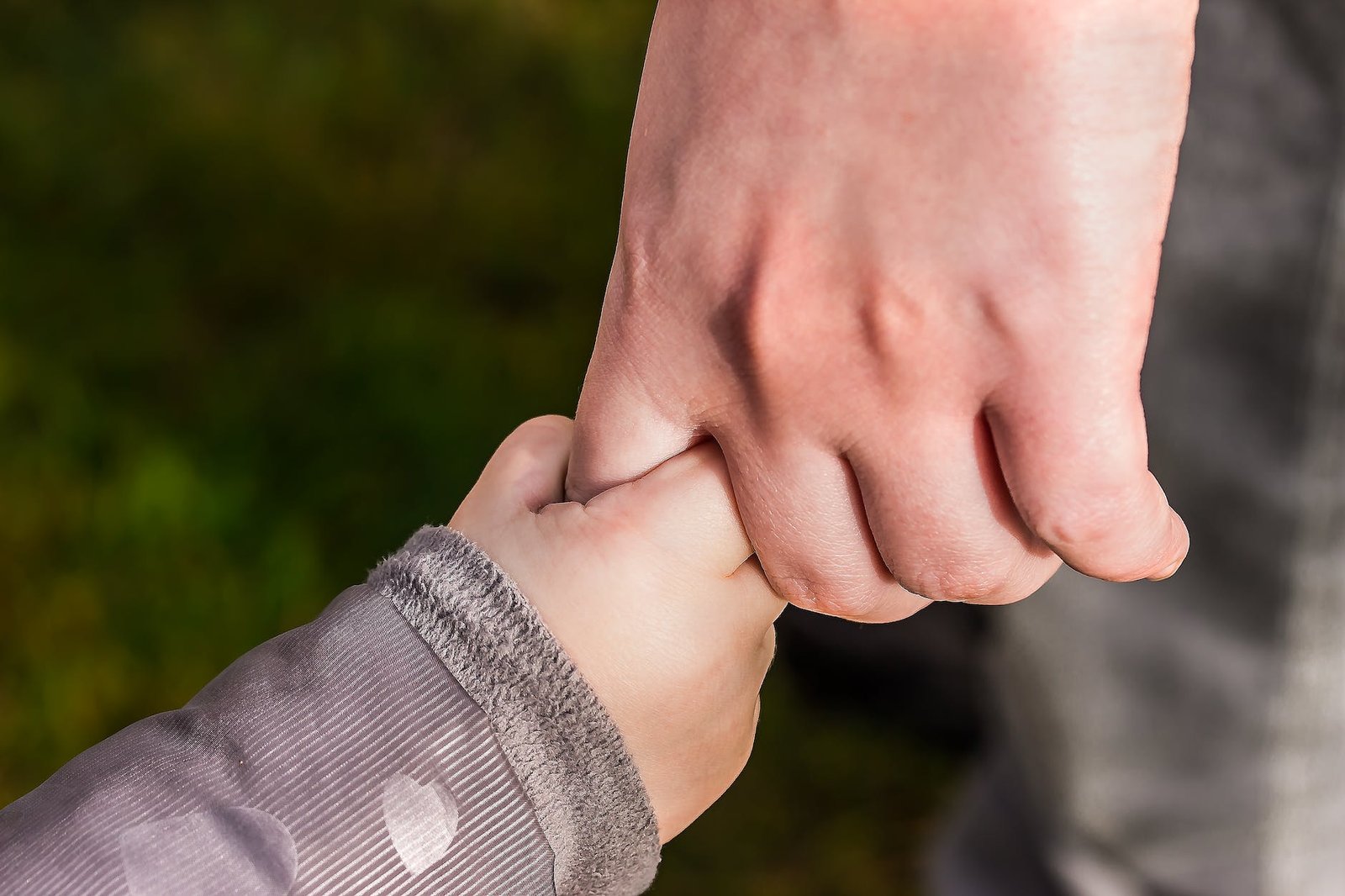
adult affection baby casual
Photo by Pixabay on Pexels.com

The way people with disabilities have been treated and portrayed by society has significantly changed for the better. There are more true-to-life stories being told. These accounts unmask what other people are so afraid to talk about. That doesn’t mean further change of people’s mindset surrounding our community couldn’t be accomplished. Acceptance of parents with disabilities is one of the components that could be used as a starting point to get the dialog of what living with a disability is really like.

This may seem like a tall order to fill, even in the 21st century. There are still societal and attitudinal barriers that are faced by the disability community regularly. These only seem to be amplified by mentioning the words parenting with a disability in the same sentence. There are so many related topics that are seen as taboo when you add the fact that some people with disabilities decide to have a family. There are still important issues like healthcare, relationships and over all well being that are ignored for people with disabilities because we don’t need those kinds of services. The reality of the matter is that we need more accessible information to be available so that we can have an increased quality of life. This information will help us make informed choices on the options of healthcare. That is when we will be able to make informed decisions about those subjects. The people who are most cherished in our lives need us to be healthy so we can participate in everyday activities.

It is important to raise awareness of parents with disabilities to the next level. People need to have the opportunity to learn more about what parents with disabilities must overcome even when making the decision of whether to go down the road of parenting in the first place. Sometimes people feel like parents that have a disability will become a burden to their children. Everyone’s child wants to take care of their parents as they age. Parents with disabilities are no different.

The conversations we have with our children and others around us are important in shaping the views people have surrounding a concept. The ideas shared on the subject with their children will help form the belief systems they will carry through their lives. If we can turn the tide to a more positive feeling surrounding disability, that would be a step in the right direction. Then there will be change and as a result mainstream society will see parents and people with disabilities in a more positive light.

Hopefully through the next series of content posted on the blog, questions will be answered and things that some people are afraid to ask will be answered.

Experiences of Parenting with a Disability Help Increase Disability Awareness

Mother’s Day is a time to celebrate mothers and all they do. Since Mother’s Day was this past Sunday, it made me think about how I’ve used the experiences of parenting with a disability I’ve had through the years. There are three main ways I’ve used my experiences. When I thought about it more, all of them are important to raising awareness of issues surrounding people with disabilities too.

Some people would say that parenting isn’t for everyone. The same could be said from the perspective of a parent with a disability. Every time I give my speech about parenting with a disability, the main message is to do your research before you make any choice.

In the beginning, I didn’t realize the challenges I would face when it came to the way people reacted to me being pregnant. The same was true after my son was born. I wasn’t even sure how I would compensate for my physical limitations. It was both exciting and left me with a sense of apprehension. I was also adjusting to the weekly changes my body was going through from the pregnancy. Some of those changes made life a little more complicated. I was happy to go through these challenges because of the new adventures and experiences parenting was going to allow me to have with my baby.

Because I realized that my son learns from my behaviors and how he sees me react to others, I didn’t want to give him a negative example. I decided to use the experiences and turn them into something positive. The three ways I highlight in this post can have a positive impact on society and the way it perceives people with disabilities in a variety of ways.

The first way is to educate the public. There have been times in a store or even when my son played soccer where people have confronted me with their misconceptions about people with disabilities. Sometimes they have said blatantly mean things to me about being in the outdoors or out in public.  Instead of having a negative reaction, I use the opportunity to let people ask questions. This approach is surprising to them but, I believe it’s the only way to help get rid of the unnecessary fear or misconceptions they might have. Most of the time it has created an ongoing dialogue with the people around me at the time it happens. Once people see there is an available space to ask questions, they seem more at ease. It allows them the chance to gain a better perspective into the human experience of disability.  Hopefully, it helps them not be so afraid at other times when they may encounter a person with a disability.

The second way is to advocate for issues related to parenting with a disability. Luckily, I have had previous experiences advocating for myself and others for different reasons. For someone who feels like advocacy is a scary or intimidating topic, it’s never too late to start sharpening your advocacy skills. It can be an exciting journey where you learn more about yourself and the way each organization functions. You can also tap into different avenues available in your community for help. Whether it has something to do with school, sports or getting to my son’s doctor’s appointments, I’ve had to advocate for different issues. Other examples include requesting needed accommodations to attend a parent teacher conference or using a delivery service to get a prescription. For the most part, once you express a need there are people around willing to lend a hand.

The third way is to foster a sense of acceptance and understanding of people who have different limitations. For example, it takes me a little longer to get on the floor and play with my son. He has  learned to be patient with me and even figured out ways to help. Having a parent with a disability helps children be more patient with their parents, themselves and other people. Because he has watched me adapt to different environments, he has a greater awareness of his surroundings. There have even been articles stating that children of parents with disabilities develop greater emotional skills and are more empathetic than kids whose parents are not disabled.

Everyone’s journey of parenting and parenting with a disability will be different. The most important part is to enjoy the ride because it goes by quickly. Parenting with a disability tests your strengths and limitations like you would never imagine. It provides great rewards that are worth every moment spent overcoming obstacles and sharpening your skills. The result is an experience no one can take away from you. It will strengthen the bond you have with your child for years to come.

Thoughts about a Passenger with an Invisible Disability

An invisible disability can be a very perplexing, and maybe even an uncomfortable topic for some people. For most people, when they think of the term “disability”, what comes to mind may be someone with a visible disability, in other words, an impediment they can see.  There are still some people that don’t realize there are disabilities that are invisible, or can’t be seen with the naked eye alone.  An invisible disability is exactly that, invisible. At the same time, just because someone has an invisible disability, doesn’t mean they aren’t in need of assistance accomplishing their goals.  Also, just because it isn’t clear that someone has a disability, doesn’t mean they aren’t in fact disabled.  Recently, I was made aware of a story about an airline passenger who has an invisible disability that had an incident trying to utilize an accommodation that was available to her.  Due to the nature of this story, it’s important to point out that the person with the disability knows what kind of assistance they need, and should be heard when they let people know how someone else can help them.  After all, the person with the disability lives with their disability everyday, and knows best how things affect them in their surroundings.  They also know how to get things done in the best way for them.

When we travel, we prearrange accommodations over the phone with our airline.  We don’t expect to have any issues once we get to the airport.  Vacations are a time to rest and relax from our daily lives and the stress that comes along with it.  It’s unfortunate that this incident occurred and, according to the passenger’s prior experiences mentioned in the article below, sadly this isn’t the first time it has happened. The fact that this incident happened is a reminder that continued efforts of increasing disability awareness need to be focused on by a variety of industries that have constant interaction with the public.

A blanket category of disability doesn’t exist.  This incident is an example of how a person’s situation doesn’t “fit” into what some people “think” disability is, or should be.  As a result, the passenger had to experience difficulties that weren’t necessary.  While more visible “cues” would probably make some people more easily able to cope with the situation, or situations similar to this, it’s currently not the case.  Additionally, given the advances in medical science and technology, it seems like the term “disability” may continue not to “fit” what people think it is, or should be.  That’s not a bad thing for the person or society.  After all, various advances in many fields have made positive impacts in the ability of people with disabilities to work, and have even improved their quality of life.  These are just a few examples of the positive things that have happened due to different innovations in society.

Unfortunately, until we all work together to feel more comfortable about the term “disability” and those it affects, in conjunction with not being afraid to be more inquisitive about the subject, it seems this will continually be a cycle that has no end.  More education and sensitivity training for workers in different industries would be a great starting point to break the ice for many people.  As a community, we are increasingly active with everyone else that lives, works, and plays in society.  These experiences, while certainly unfortunate, should be used for all as a tool for learning and growth.

Thanks for reading..

cr


Here’s the link to the article:

http://www.independent.co.uk/travel/news-and-advice/disabled-woman-stansted-airport-refuse-help-ryanair-nathalie-allport-grantham-a8138051.html

Law Enforcement’s New Disability Consideration..

Sometimes I use my posts to shed light on subjects that may not be considered relevant to disability as an issue but, could use some exposure in some way. This week, I wanted to shed some light on law enforcement and their treatment of people with disabilities. I know there’s a large push to increase disability sensitivity among law enforcement but this post is going to talk about something that’s reaching into a totally new dimension.

The issue I’m thinking about is totally different. It involves the split-second decisions a law enforcement officer had to make at a group home in Georgia that injured one of its residents. This is clearly a case of entering uncharted waters as it relates to law enforcement and their interactions with people who have a disability. I’m not sure if, or how law enforcement can act less aggressively when their primary job is to ensure the safety of the general public. In emergency situations faced by law enforcement on a regular basis and, as in this situation, I’m not sure how the ADA fits in.

Somehow, some people feel if there’s a suspect in a crime who has a disability, and that person’s disability isn’t considered in crisis or emergency situations, that’s a violation of the Americans with Disabilities Act (ADA). The Americans with Disabilities Act (ADA) is an attempt to “level the playing field” for those with disabilities on a daily basis. Once the situation has been deescalated, steps should be taken in accordance with the ADA to ensure things like effective communication, if the person has a hearing impairment, and access to the courthouse, if the person a mobility impairment, for example, are observed. These are just a few ways of how the ADA was meant to be utilized as it’s currently written. Quite honestly, I’m not sure if law enforcement has time to consider the ADA when you’re talking about life and death.

I’ll be interested to see what the Supreme Court decides. Maybe, instead of using part of the ADA to regulate this sort of situation, a new law should be drawn up in an effort to have a clearer framework available. I’m not saying the situation should be ignored, because it does need attention. It might just be that another avenue needs to be explored to have more effective action plan put in place.

Thanks for reading..

cr
For more information on this story check out the link below:
http://lubbockonline.com/filed-online/2015-03-21/supreme-court-considers-impact-disability-law-police-mentally-ill#.VQ4SleFGSSo

“Margarita, with a Straw” Thoughts

In the course of writing this blog, I’ve spent time exploring how the media portrays people with disabilities. The film “Margarita, with a Straw” goes one step further and talks about a person with a disability and their experience with relationships too. Unfortunately, there are many people who think people with disabilities are unable to have intimate relationships because of their limitations. Making that assumption without talking to the person about the subject will only lead to inaccurate information. As I may or may not have said before, the way a person’s disability affects them ranges. While I’m not a medical professional, I can say that reading about Cerebral Palsy or any other disability on a website like WebMD, or picking up a book on the subject may not give you the most accurate information on a particular person’s daily life.

Like with most other things, communication is really the key to quenching the curiosity that might exist. It’s not a bad thing to ask questions about things we don’t know. An even worse outcome would be to miss out on a great and adventurous experience with someone you care about just because there’s no dialogue about a particular issue. Also, not knowing the right information about that person may lead to unnecessarily hurting their feelings.

While I haven’t seen “Margarita with a Straw” I’m glad someone took the chance to make a movie on a subject some may consider taboo. Hopefully, this movie will catch the eye of an American filmmaker and they have the idea to bring it to American audiences. It’s a great way to raise awareness on the fact that disabled people have the same wants and needs as everyone else. It’s also a great way to open dialogue on a side of a disabled person’s life that’s rarely talked about but, is worthy of some attention.

Thanks for reading..

cr

For more information on the movie, check out the link below:

http://variety.com/2015/film/reviews/film-review-margarita-with-a-straw-1201406266/

Caught in the Crossfire

This week, I thought I’d spend some time talking about something that might happen when people become disabled because of violent crime. Unfortunately, the topic of Disabled Victims of Crime seems to be a subject that isn’t talked about too much, or is simply ignored all together.

Having a Criminal Justice background and having been blessed to have spent some years actually working in the Criminal Justice System, it’s sad that not enough attention is given to what happens to innocent bystanders sometimes involved.  I’m talking about the ones who ultimately suffer the consequences of someone else’s actions.  Does anyone give a second thought to the impact the incident may have on them long after criminal proceedings come to a close?  This brings me to the case of Danielle Sampson.

She was hit by a bullet that wasn’t intended for her and now lives with a Traumatic Brain Injury (TBI). I’m glad her family won a civil law suit against the convicted shooter. The money they receive should help with her required around-the-clock care. At the same time, because the shooter received a 30 year sentence in Florida’s Department of Corrections, it leaves me wondering, how much of the money will her family actually get to help with her daily needs?

Increased attention is good in these type of cases because it leads to the potential of more awareness. Although the best case scenario would obviously be violent crime not occur in the first place. This is just one example that because of violent crime, many lives have been impacted forever.

For more information check out the link below:

http://www.wftv.com/news/news/local/man-convicted-shooting-12-year-old-asks-new-trial/ngKCJ/

Thanks for reading..
cr


ALS Awareness Sweeps Social Media

Today I’m applauding “The Ice Bucket Challenge”. Until a few days ago, I didn’t realize the impact it’s been having, not only on Social Media but, also raising awareness and funds for ALS, also known as Lou Gehrig’s disease. Sometimes, if you’ve seen the annual Muscular Dystrophy Telethon, you hear about this disability but, for the most part, it’s not mentioned very often.

I’m all for raising awareness on important issues, especially disability issues. Although there’s a backlash going on about this challenge, you can’t please everyone all the time. I think it’s pretty cool that it has gotten the country involved in a good cause. Everyone from Dr. Dre to Drew Barrymore and Adam Sandler have accepted the challenge. People have also donated money to the cause to help out.

Either way, it’s bringing people together, raising awareness for a good cause and of course helping in a unique way. I once knew someone who lived with ALS. Unfortunately, they passed away some years ago but, I’ll never forget their voice and the sunshine they carried around with them that lit up a room instantly.

Thanks for reading..

cr

For more information, take a look at the link below:

New “Dancing with the Stars” Cast Announced

Today, while checking out “Good Morning America”, I saw the announcement for the new cast of “Dancing with the Stars”.  If you’ve followed my posts before, you know that I’ve commented on the happenings of the show as it relates to disability awareness.  Any show that’s going to positively impact the way the disabled population is viewed by the general public should receive praise.  The show is always giving people with disabilities the spotlight as people first.

One of the new celebrities for this season is Jack Osbourne, the son of Sharon and Ozzy Osbourne.  Since the ending of the reality show “The Osbourne’s” on MTV, the public has learned that he was diagnosed with Multiple Sclerosis not too long ago.  In the past, “Dancing with the Stars” has had such celebrities with disabilities like Marlee Matlin and Heather Mills-McCartney, so they’re no stranger to making accommodations for the disabled celebrity when necessary.  It’ll be interesting to see what accommodations or obstacles Jack will overcome in order to compete on the show.

I know that Multiple Sclerosis affects everyone differently, just like every other disability but, I’m hoping that Jack’s appearance on the show can make those who have any disability see that just because you have a disability doesn’t mean that your dreams aren’t attainable or even that you still can’t participate in fun activities because that’s far from the truth.

Kudos, yet again, to “Dancing with the Stars” for being an inclusive show.  Also for demonstrating to the world that no matter what your limitations, not only will they give you the opportunity to compete but, that dancing can make a difference in anyone’s life.

Seeing shows like “Dancing with the Stars”, how have they helped you realize your potential?

Thanks for reading..

cr

For more on this story, you can go to:

http://abcnews.go.com/Entertainment/dancing-stars-2013-season-17-cast-announced/story?id=20145315