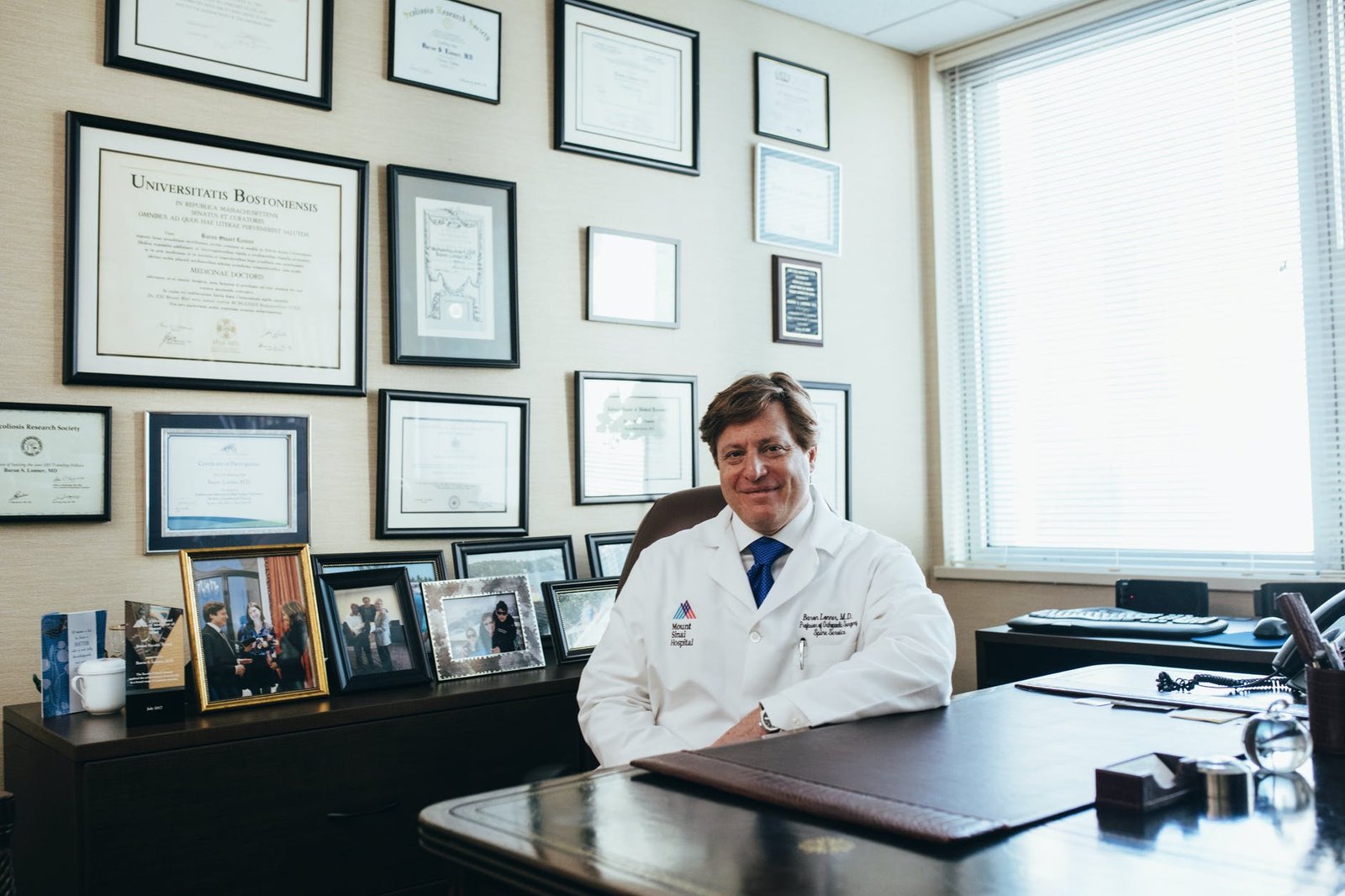
The Benefits of Having a Doctor with a Disability as Part of Your Medical Team

In recent years, there has been a lot of discussion about employing more doctors with disabilities in the medical field.

Having a doctor with a disability taking care of your medical needs has many benefits. It has a positive impact on the patient, and parent or caregiver in addition to creating a shift in the mindset of society about disability.

As a patient with a disability, having a doctor who is also disabled has a positive impact on their overall experience in a medical setting. It not only gives them someone who can relate to their issues on a more personal level, but can also help break the barriers of what society has projected disability to be. The patient can see that someone’s limitations don’t have to be a barrier to what they want to achieve in their lives.

The patient or even their parent can see that disabilities don’t have to limit career choices or the future we create for ourselves. The patient can see that not only can their medical needs be addressed by someone that can potentially better relate to their circumstances, but they can also see a real-world example of how someone can overcome their limitations to have a career that makes them happy.

Suddenly, the added stress they might sometimes feel about going to the doctor and having to justify other issues has suddenly melted away. They can address the actual reason for their visit. They get right to the point in your medical care and are that much closer to finding a solution to the problem at hand.

Sometimes parents aren’t sure what life with a disability is going to be like for their child. If they see adults with disabilities as doctors, or other professionals in different fields, they can gain a different perspective about what someone’s life with a disability can look like in the future. The doctor or other professional may even be willing to share advice on how to reach their goals while living with their disability. This might also help the parent understand how to better help their child reach their dreams. 

The more society gets to see doctors and other successful professionals with disabilities in our society, the more likely it is that a lot of misconceptions about disability will change for the better. Society can get the chance to really recognize that people with disabilities can be productive and contribute to society in positive ways.

People with disabilities can achieve a career goal and even live in the same communities while making a difference in the lives of other people. These examples should be a catalyst to change how society views disability. It should also be a motivator so that those with a disability don’t feel like they can’t achieve whatever goal they set for themselves.  

If you are lucky enough to have a doctor with a disability, you get to see that people with disabilities don’t have to be put in a box when it comes to what they want to do for a profession. The limitations we face can be overcome by some form of modification or accommodation. Seeing someone with a disability in a high-status position can help you go after your dreams, whatever they might be.

If you are a person with a disability and you want to be a doctor, a lawyer, or anything else, anything is possible. Don’t let your limitations stop you from accomplishing your dreams. There are so many people with disabilities that currently have influential jobs or positions in the community. The only thing left to do is research what it takes to be a part of your profession and start down the path to success.

Students with Disabilities and Gaps in their Education During the Pandemic

During the coronavirus pandemic, the way education is delivered to students in the United States has drastically changed. Students with disabilities are more affected than most by this change.

Students with disabilities are caught in a situation they didn’t choose. How they get their education has been altered so drastically, portions of their daily routine have become nonexistent. Related services that were part of their Individualized Education Plan (IEP) have been slashed to a minimum or eliminated. Few services can be delivered effectively by virtual means or by the student’s parents. Parents are left at home attempting to deliver services they are not trained to provide, potentially causing their student unintentional harm. For example, if parents try to assist in physical  therapy sessions, they could hurt themselves or their children because they aren’t trained in the correct techniques. There have even been instances where it seemed to the parent that the student’s impairment was totally disregarded. This left the time used for the therapy session like some sort of preliminary fact-finding mission, instead of building on progress previously made during the last session.

School officials try their best to modify plans and deliver needed services. Because the pandemic happened so quickly, they are poorly prepared to do so. Even now, more than a year into this model of learning, educators are on a continual learning curve they just can’t get ahead of, while students are left behind. It makes you wonder how this set of students going to school during such an unusual time will compensate for the gaps being left in their education in years to come.

Although students are missing their friends and the socialization aspect traditional school offers, some parents of kids with disabilities find themselves in another dilemma. The student with a disability might be at a higher risk of contracting the virus. As a result, parents feel they have no other choice but to keep students in the virtual model of learning. Parents must take extra precautions not to come into contact with the virus. There might be other risks involved with exposure to the virus. If a student contracts the virus, they could have other health complications as well. The million-dollar question becomes how do we get all our students back to school so they can receive their education and services properly, while staying safe from the virus at the same time?

In implementing any reopening plan, many factors need to be considered. First, the health of the students and how to catch them up on the material that is being missed. Students need instruction and guidance about things like social distancing, proper handwashing and most difficult of all, consistently wearing a face mask. Some individuals with a disability can’t wear a face mask for medical reasons. If that is the case for a student, an alternative plan needs to be implemented. Lastly, the health and well-being of the educators must be considered as well.

Currently educators are at the front of the line when it comes to receiving the COVID-19 vaccine. Additionally, other workers such as speech, physical and occupational therapists need to be added to that list. These workers need to be considered essential and should be prioritized. One of the goals in returning us to pre-pandemic education is to fully open schools. That can’t be done unless these support personnel whose aim is to provide related services to students with disabilities get vaccinated too. They ensure students stay focused on their education while making sure their therapeutic needs are met regularly.

These are merely a starting point of suggested guidelines to help students with disabilities get safely back to learning in the classroom. The positive steps we take to rid ourselves of the virus will give kids the opportunity to move forward and make the progress they need to confidently succeed as young adults, well-prepared for different kinds of adversity.

Changes in Media Representation of People with Disabilities: A Look Forward

What ideas get the most publicity in the media? As most people know, advertisements and the media give us an idea of the current climate in society about a particular topic or trend.  It’s no different when contemplating how people with disabilities are portrayed in the media. It’s been this way throughout history.  This post highlights some of the changes that stand out, and what they mean for the way disability is evolving in the public eye.

The idea of people with disabilities in the media has a long and tumultuous reputation that can be classified as non-existent at best. In the last thirty years, while there’s still massive debate on people with disabilities in roles portraying people with disabilities, it still doesn’t happen very often at all.  More recently, what piqued my interest on writing this post is that a network channel is airing a show with a disabled character in the principal role.  This demonstrates progression of how people with disabilities are viewed in society.  Many years ago, characters like Geri Jewell got small walk on roles that would last a relatively short time.  At least she was a person with a disability playing a person with a disability.  She was the first regular cast member with a disability on a television show.

Sadly, it’s still not commonplace that a person with a disability play a role where they’re portraying a person with a disability.  This is yet another layer of the debate that’s a thorn in the side of many people. Despite the debate on both sides, the state of actors and characters with disabilities has slowly improved.  However, it’s noteworthy that disability has been more visible in things like commercials and store advertisements.  When the show “The Good Doctor” aired, it made me think of where people with disabilities as a population have come from in the eyes of different media outlets.  Even when “Speechless” aired, also on the same network, it seemed like a natural progression to the direction in which society was headed, no matter how slow the progress.  Finally, the idea that people with disabilities can make positive contributions in many aspects was being broadcasted into people’s living rooms for everyone to see. We were no longer in the shadows like something shameful that needed to be hidden away.

The latest development of people with disabilities in the media is the first Gerber baby with Down Syndrome.  Here’s an additional layer of the onion being peeled off.  This milestone reaches the demographic of parents who have a child diagnosed with a disability.  Parents whose children are diagnosed with a disability feel a mix of emotions at first. They aren’t sure what to expect, or even what the next step might be for their family.  This change in advertising might be one way to shift those parents’ outlook of their child’s potential for the future. The message being, it doesn’t have to be as grim as it maybe once would’ve been.

The varying dimensions of the integration of people with disabilities into popular culture have numerous benefits.  It helps orchestrate increased acceptance of disability in society.  Slowly, the layers of negative stereotypes that have plagued us as a community for so long are deteriorating in front of our eyes.  Seeing different media outlets give positive representation and exposure to people with disabilities is a refreshing change in many ways.  We’re beginning to be people who can help others, not people constantly in need.  This allows for the opportunity of open dialog on a varying number of topics that make people with disabilities more real and vital to contemporary subjects.  It’s also broadening society’s ideas on the capabilities people with disabilities possess no matter what their limitations.  In the future, it will be interesting to see how the subject of disabled actors evolves with Executives in Hollywood and how the debate is ultimately resolved.

Thanks for reading..

cr

Geri Jewell clip:

https://www.youtube.com/watch?v=ryXN-FyNMUw

Gerber baby clip:

https://www.today.com/parents/2018-gerber-baby-first-gerber-baby-down-syndrome-t122258


Christmas 2013

Before becoming pregnant with my son, I’d researched and contemplated having a child.  Most people tried to discourage me, or said I’d be a burden to him or her.  Some told me, and tell me, even today, I should tell him I’m disabled.  I don’t make a big deal about it and won’t tell him because I don’t think it matters.  I take care of him and love him and am his mom.  Those are the most important things, also, in the long run, he’ll know but, again, it doesn’t matter.

I’d heard about a little girl who signed her Christmas play for her parents, who happen to be deaf.  At the risk of sounding corny, this is one of the most loving things she could do for them.  It allows them the opportunity to fully participate in her extra-curricular activities despite their limitations.

This is just an example of children showing they love their parents despite their limitations.  For this reason, I don’t feel like disabled parents are burdens on their children, or that as a disabled person, you don’t have a right to have a child just because you’re disabled.

The last example I have of this is Shemar Moore from “Criminal Minds”.  His mother has Multiple Sclerosis.  He’s constantly trying to raise awareness about M.S. and make his mom’s life the best it can be.  No matter what level of ability the parent has, the child will love them either way.

Thanks for reading..

cr

Accessible Playgrounds

One of my favorite things to do is go with my son to the playground.  We’re very lucky that one of his mom’s friends doesn’t live too far and picks us up every week so that he can go and have some fun with his friends.  As a child, I remember going to the park in Brooklyn and playing on the swings but, not much else.  I also had a swing set at home and my friends used to come to my house and play for a little while when they could.

Last week, it occurred to me that most places don’t have accessible playgrounds where everyone has the opportunity not only to play but also interact with each other.  Then, I heard something on the radio about accessible playgrounds so, I did a bit of research.  There are some playgrounds in different parts of the country that are specifically constructed for kids with disabilities.  While the Americans with Disabilities Act (ADA) requires that public places, like public playgrounds be accessible, these modifications only need to be made to playgrounds already in existence if they’re undergoing renovations.  Accessibility of playgrounds also applies to those playgrounds being newly constructed.

Then, another thought occurred to me.  Accessible playgrounds allow for disabled parents to play at the playground with their kids too.  That’s a wonderful idea since some of the best memories we have as kids are the times we spend having fun with our parents.

What do you think about the idea of an accessible playground?

To find out more information, you can go to:

http://www.npr.org/2013/08/27/213827534/for-kids-with-special-needs-more-places-to-play

Thanks for reading..

cr