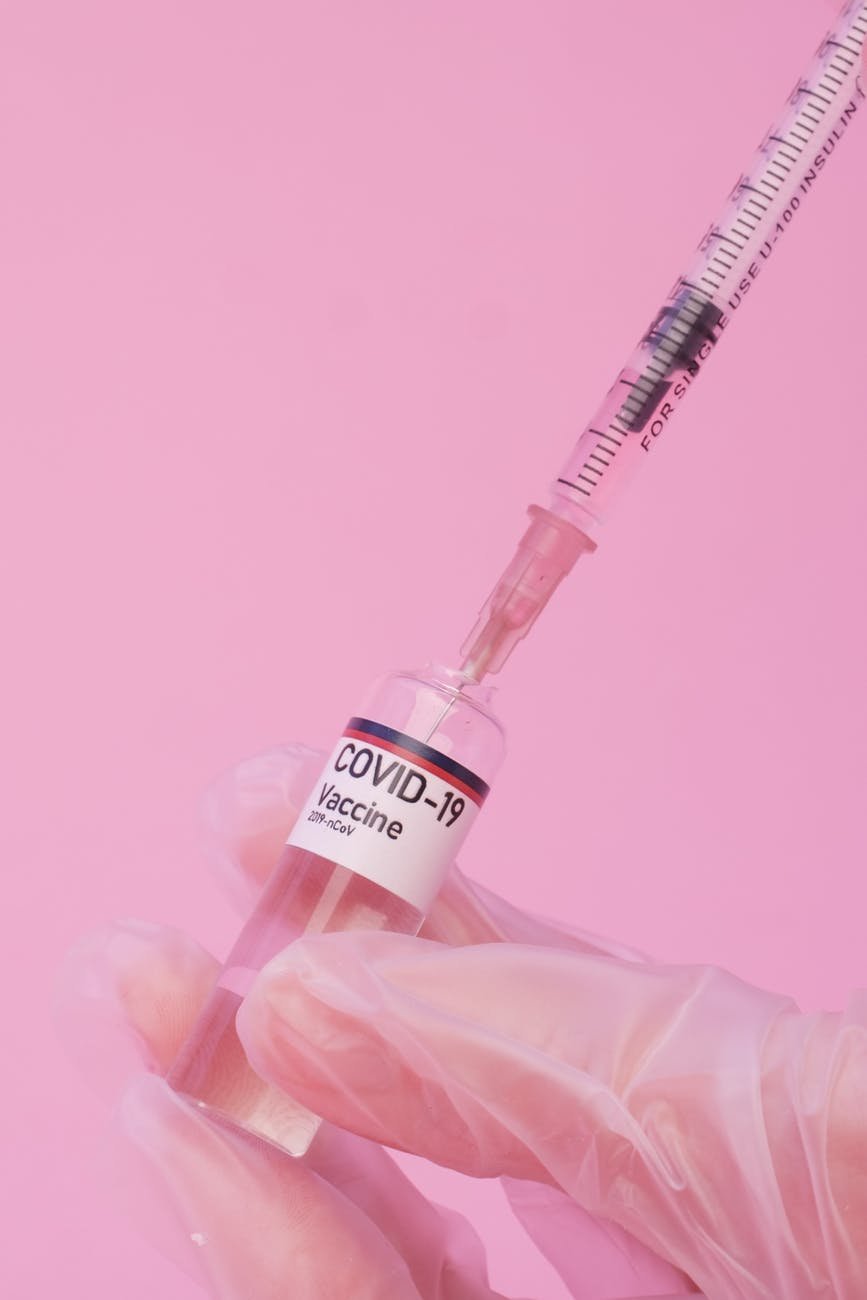
Coronavirus Vaccination Chronicles: Part One

The coronavirus pandemic has forced us to spend the last year at home. Because vaccines are now available and being administered, it’s time to restart interacting with others more regularly.

I wanted to write this post to share my experience of getting the vaccine.  I also wanted others who haven’t been vaccinated yet to get a better idea of what to expect about the process. This is a three-part series detailing my experience being vaccinated with the Moderna vaccine.

Since the vaccines being used to fight the devastation the virus is causing in different countries was approved so quickly, I was a bit apprehensive about getting the vaccine.

Most vaccines go through rigorous testing before they are considered safe and effective for people who choose to get vaccinated. I felt like this was the best choice for me so that life could start to return to some sort of normalcy.

Although I am getting vaccinated, I can do my part by continuing to wear a mask and practice social distancing when I have to leave my house. There are still people who haven’t been vaccinated for various reasons and others they may come into contact with that could inadvertently be affected by my actions.

I thought that getting the vaccine would be as easy as making an appointment with my doctor. After doing some research and calling my doctor, I found out he didn’t have any doses of the vaccine available. It turns out they weren’t sure if or when they would be administering doses to patients. They directed me to the CDC website so that I could get the required medical necessity documentation. The documents were sent to me electronically, so I didn’t have to go to their office.  When I looked into the other options available to me, I found out that the local health department was administering doses. Some stores such as Walmart, Sam’s Club and Publix were also options for people interested in getting the shot. Since I know that Publix has given out flu vaccines in the past, I was comfortable in choosing them as my preferred option to get my vaccine.

I had to get up early to complete my online reservation. Once I was on the website, and because I was not an educator or part of the age requirement at that time, I had to wait a while to input my information.  Once my appointment was reserved, I got a confirmation email with both my initial appointment as well as for my second vaccination.

I must admit that I was a little nervous the night before the appointment. It was honestly because I did not know what to expect. I’ve been vaccinated before with no problem, so I think it was fear of the unknown. Regardless of the anxiety I was feeling, I was determined not to let it stop me from this first step back toward the active life I had pre-pandemic.

We arrived at the grocery store and they had a designated person checking people in for their vaccine. When I got back to the pharmacy, I let the pharmacist know that the shot needed to be given to me in my right arm due to my disability. He had to correct my card and move the chair but was quick to adjust to my request. The vaccination process was quick, and I was on my way as fast as I had gotten to the store. This experience makes me a bit more at ease when it’s time for my next dose.

Now it’s your turn. Do the research necessary to make the best choice for you and your family. Don’t be afraid to talk to your doctor to figure out the best option for you. I will be back with more of my post vaccination experience.

The Inauguration of a New President of the United States and What it Means for People with Disabilities

Along with the Inauguration of a new president and vice president of the United States, comes new possibilities for people with disabilities.

As I sat watching history being made when Kamala Harris took the oath of office, I realized she has knocked down many barriers. Not only for women and women of color, but also for people with disabilities.

The theme of inclusion and unity was not only prevalent but relevant during the historical event.  Because Vice President Harris is now in office, the possibility of further inclusion for all is now a reality more than ever. The firefighter who led the Pledge of Allegiance in spoken word and sign language was a surprising change. It was also a sign of the times. In my opinion, it symbolizes the dedication the current administration has of including everyone in this country, even people with disabilities.

When President Franklin D. Roosevelt was in office, he spent most of the time hiding his disability. Researching the political climate that existed during those years for other projects I’ve done on his presidency and its importance for people with disabilities, I’m not sure society would have been accepting of openly having a person with a disability serving in a political office. The fact that he occupied the highest political position in our land may have made it even more mind-boggling for some. During Roosevelt’s time, people with disabilities were hidden in the shadows. Individuals with disabilities were regularly being housed in institutions instead of in community settings when possible. We had not gained the rights from laws like the Americans with Disabilities Act just yet. The ADA helped people with disabilities acquire the opportunity of a level playing field to accomplish individual goals. It also gave them the chance to be more active and visible in society. That includes things like voting and even running for political office.

The possibilities available to us now are only limited to how big we allow ourselves to dream. Since the passage of the ADA, people with disabilities have been making strides to increase not only representation but acceptance of our community into the mainstream. Society is increasingly interested in diversity and inclusion more than ever. That conversation cannot be complete unless people with disabilities are part of the equation.  It’s more likely now that a young person with a disability can see themselves as the next vice president or even president of the United States.

This is the perfect opportunity to increase our visibility and make our mark on society. The steps we take today to let our voices be heard and our influence felt can only help us move the ideas of what it really means to live with a disability forward. We can be the reason long-standing myths are eradicated and new ideas become the norm. There are always opportunities to change the outdated and inaccurate stereotypes that surround disability.

While there are disabled politicians such as Senator Tammy Duckworth (D) from Illinois, who currently occupies a political office, for some reason this seems different. Now is the time to set goals and take action to increase representation of people with disabilities in all aspects of society. Every step forward is needed and welcomed. Every victory toward increased representation should be celebrated. We can accomplish anything we want to achieve. There are so many aspects of society that need the input of the disability community. The only question that remains is what is the most efficient course to chart in pursuit of your personal success?

Changes in Media Representation of People with Disabilities: A Look Forward

What ideas get the most publicity in the media? As most people know, advertisements and the media give us an idea of the current climate in society about a particular topic or trend.  It’s no different when contemplating how people with disabilities are portrayed in the media. It’s been this way throughout history.  This post highlights some of the changes that stand out, and what they mean for the way disability is evolving in the public eye.

The idea of people with disabilities in the media has a long and tumultuous reputation that can be classified as non-existent at best. In the last thirty years, while there’s still massive debate on people with disabilities in roles portraying people with disabilities, it still doesn’t happen very often at all.  More recently, what piqued my interest on writing this post is that a network channel is airing a show with a disabled character in the principal role.  This demonstrates progression of how people with disabilities are viewed in society.  Many years ago, characters like Geri Jewell got small walk on roles that would last a relatively short time.  At least she was a person with a disability playing a person with a disability.  She was the first regular cast member with a disability on a television show.

Sadly, it’s still not commonplace that a person with a disability play a role where they’re portraying a person with a disability.  This is yet another layer of the debate that’s a thorn in the side of many people. Despite the debate on both sides, the state of actors and characters with disabilities has slowly improved.  However, it’s noteworthy that disability has been more visible in things like commercials and store advertisements.  When the show “The Good Doctor” aired, it made me think of where people with disabilities as a population have come from in the eyes of different media outlets.  Even when “Speechless” aired, also on the same network, it seemed like a natural progression to the direction in which society was headed, no matter how slow the progress.  Finally, the idea that people with disabilities can make positive contributions in many aspects was being broadcasted into people’s living rooms for everyone to see. We were no longer in the shadows like something shameful that needed to be hidden away.

The latest development of people with disabilities in the media is the first Gerber baby with Down Syndrome.  Here’s an additional layer of the onion being peeled off.  This milestone reaches the demographic of parents who have a child diagnosed with a disability.  Parents whose children are diagnosed with a disability feel a mix of emotions at first. They aren’t sure what to expect, or even what the next step might be for their family.  This change in advertising might be one way to shift those parents’ outlook of their child’s potential for the future. The message being, it doesn’t have to be as grim as it maybe once would’ve been.

The varying dimensions of the integration of people with disabilities into popular culture have numerous benefits.  It helps orchestrate increased acceptance of disability in society.  Slowly, the layers of negative stereotypes that have plagued us as a community for so long are deteriorating in front of our eyes.  Seeing different media outlets give positive representation and exposure to people with disabilities is a refreshing change in many ways.  We’re beginning to be people who can help others, not people constantly in need.  This allows for the opportunity of open dialog on a varying number of topics that make people with disabilities more real and vital to contemporary subjects.  It’s also broadening society’s ideas on the capabilities people with disabilities possess no matter what their limitations.  In the future, it will be interesting to see how the subject of disabled actors evolves with Executives in Hollywood and how the debate is ultimately resolved.

Thanks for reading..

cr

Geri Jewell clip:

https://www.youtube.com/watch?v=ryXN-FyNMUw

Gerber baby clip:

https://www.today.com/parents/2018-gerber-baby-first-gerber-baby-down-syndrome-t122258