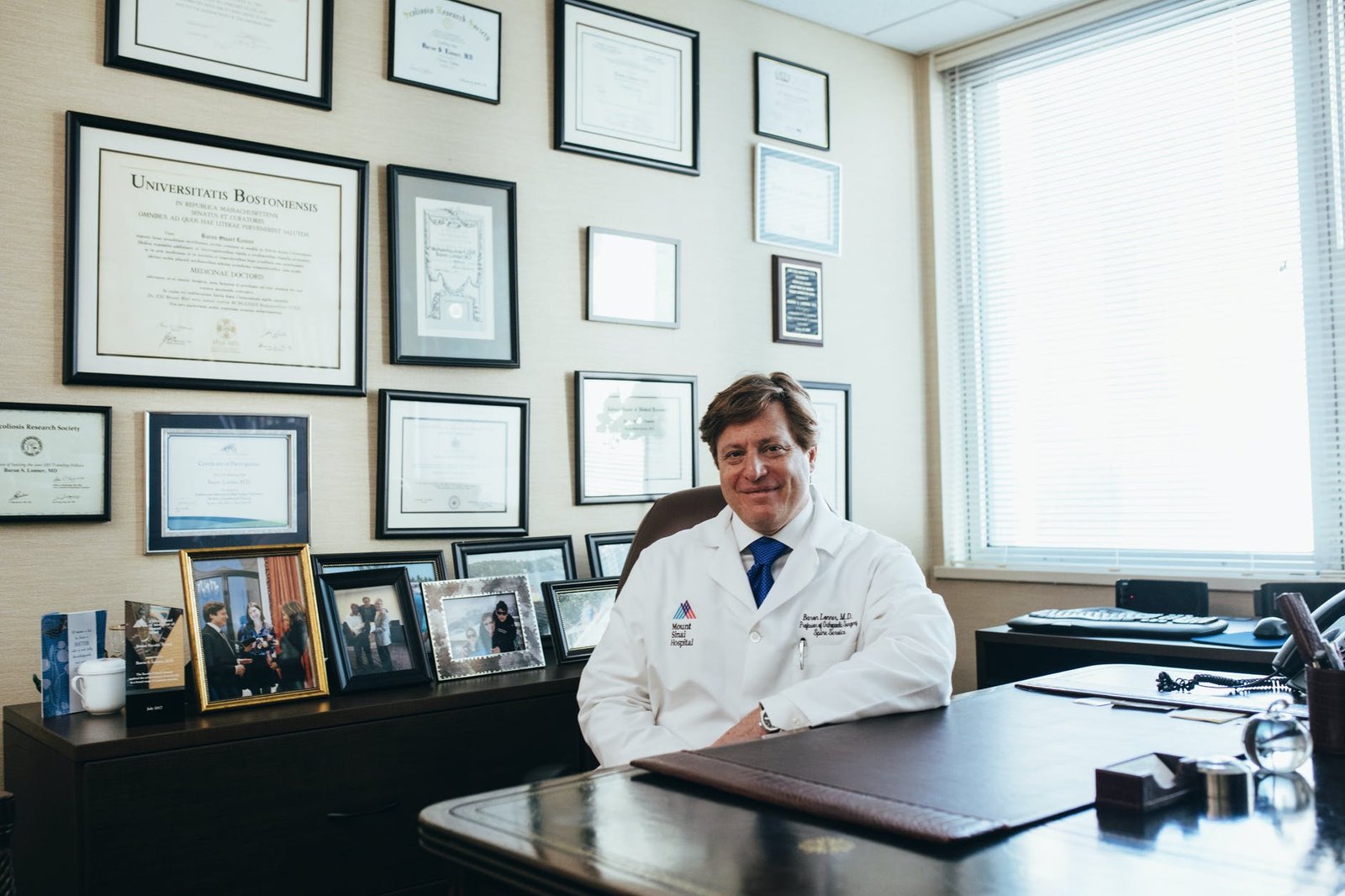
The Benefits of Having a Doctor with a Disability as Part of Your Medical Team

In recent years, there has been a lot of discussion about employing more doctors with disabilities in the medical field.

Having a doctor with a disability taking care of your medical needs has many benefits. It has a positive impact on the patient, and parent or caregiver in addition to creating a shift in the mindset of society about disability.

As a patient with a disability, having a doctor who is also disabled has a positive impact on their overall experience in a medical setting. It not only gives them someone who can relate to their issues on a more personal level, but can also help break the barriers of what society has projected disability to be. The patient can see that someone’s limitations don’t have to be a barrier to what they want to achieve in their lives.

The patient or even their parent can see that disabilities don’t have to limit career choices or the future we create for ourselves. The patient can see that not only can their medical needs be addressed by someone that can potentially better relate to their circumstances, but they can also see a real-world example of how someone can overcome their limitations to have a career that makes them happy.

Suddenly, the added stress they might sometimes feel about going to the doctor and having to justify other issues has suddenly melted away. They can address the actual reason for their visit. They get right to the point in your medical care and are that much closer to finding a solution to the problem at hand.

Sometimes parents aren’t sure what life with a disability is going to be like for their child. If they see adults with disabilities as doctors, or other professionals in different fields, they can gain a different perspective about what someone’s life with a disability can look like in the future. The doctor or other professional may even be willing to share advice on how to reach their goals while living with their disability. This might also help the parent understand how to better help their child reach their dreams. 

The more society gets to see doctors and other successful professionals with disabilities in our society, the more likely it is that a lot of misconceptions about disability will change for the better. Society can get the chance to really recognize that people with disabilities can be productive and contribute to society in positive ways.

People with disabilities can achieve a career goal and even live in the same communities while making a difference in the lives of other people. These examples should be a catalyst to change how society views disability. It should also be a motivator so that those with a disability don’t feel like they can’t achieve whatever goal they set for themselves.  

If you are lucky enough to have a doctor with a disability, you get to see that people with disabilities don’t have to be put in a box when it comes to what they want to do for a profession. The limitations we face can be overcome by some form of modification or accommodation. Seeing someone with a disability in a high-status position can help you go after your dreams, whatever they might be.

If you are a person with a disability and you want to be a doctor, a lawyer, or anything else, anything is possible. Don’t let your limitations stop you from accomplishing your dreams. There are so many people with disabilities that currently have influential jobs or positions in the community. The only thing left to do is research what it takes to be a part of your profession and start down the path to success.

Changes in Media Representation of People with Disabilities: A Look Forward

What ideas get the most publicity in the media? As most people know, advertisements and the media give us an idea of the current climate in society about a particular topic or trend.  It’s no different when contemplating how people with disabilities are portrayed in the media. It’s been this way throughout history.  This post highlights some of the changes that stand out, and what they mean for the way disability is evolving in the public eye.

The idea of people with disabilities in the media has a long and tumultuous reputation that can be classified as non-existent at best. In the last thirty years, while there’s still massive debate on people with disabilities in roles portraying people with disabilities, it still doesn’t happen very often at all.  More recently, what piqued my interest on writing this post is that a network channel is airing a show with a disabled character in the principal role.  This demonstrates progression of how people with disabilities are viewed in society.  Many years ago, characters like Geri Jewell got small walk on roles that would last a relatively short time.  At least she was a person with a disability playing a person with a disability.  She was the first regular cast member with a disability on a television show.

Sadly, it’s still not commonplace that a person with a disability play a role where they’re portraying a person with a disability.  This is yet another layer of the debate that’s a thorn in the side of many people. Despite the debate on both sides, the state of actors and characters with disabilities has slowly improved.  However, it’s noteworthy that disability has been more visible in things like commercials and store advertisements.  When the show “The Good Doctor” aired, it made me think of where people with disabilities as a population have come from in the eyes of different media outlets.  Even when “Speechless” aired, also on the same network, it seemed like a natural progression to the direction in which society was headed, no matter how slow the progress.  Finally, the idea that people with disabilities can make positive contributions in many aspects was being broadcasted into people’s living rooms for everyone to see. We were no longer in the shadows like something shameful that needed to be hidden away.

The latest development of people with disabilities in the media is the first Gerber baby with Down Syndrome.  Here’s an additional layer of the onion being peeled off.  This milestone reaches the demographic of parents who have a child diagnosed with a disability.  Parents whose children are diagnosed with a disability feel a mix of emotions at first. They aren’t sure what to expect, or even what the next step might be for their family.  This change in advertising might be one way to shift those parents’ outlook of their child’s potential for the future. The message being, it doesn’t have to be as grim as it maybe once would’ve been.

The varying dimensions of the integration of people with disabilities into popular culture have numerous benefits.  It helps orchestrate increased acceptance of disability in society.  Slowly, the layers of negative stereotypes that have plagued us as a community for so long are deteriorating in front of our eyes.  Seeing different media outlets give positive representation and exposure to people with disabilities is a refreshing change in many ways.  We’re beginning to be people who can help others, not people constantly in need.  This allows for the opportunity of open dialog on a varying number of topics that make people with disabilities more real and vital to contemporary subjects.  It’s also broadening society’s ideas on the capabilities people with disabilities possess no matter what their limitations.  In the future, it will be interesting to see how the subject of disabled actors evolves with Executives in Hollywood and how the debate is ultimately resolved.

Thanks for reading..

cr

Geri Jewell clip:

https://www.youtube.com/watch?v=ryXN-FyNMUw

Gerber baby clip:

https://www.today.com/parents/2018-gerber-baby-first-gerber-baby-down-syndrome-t122258