Reflecting on the Americans with Disabilities Act 31 Years Later

This week marks 31st anniversary of the Americans with Disabilities Act (ADA) of 1990. It was signed into law by President George H.W. Bush on July 26, 1990.

This anniversary gives us a moment to think about how this law for people with disabilities has impacted our lives. Reflecting on how this piece of legislation has impacted the lives of people with disabilities helps us understand where we have been. It also helps us gain a better perspective of where we need to be.

Being a person with a disability in the 1980s, when people with disabilities didn’t have the rights we have today was very interesting. I was also a person who used a wheelchair to compensate for my lack of mobility.  As a kid, the idea of going to school was both exhausting and exciting. I liked being with kids my age but had to struggle just to get in the building or use the bathroom. The idea of my school being accessible for me seemed like a dream I wasn’t sure would ever come true.

By the time I got home, I was exhausted from the trip. Then I had to make sure to get my homework done for the next day. Being mainstreamed at 7 years old left me with another job. I had to explain to the kids in my class why I had to use a wheelchair to get around.

When I went to high school, I remember having to advocate for my English class be relocated to one if the lower floors for my junior year. At that time, the school’s elevator didn’t reach the top floor where the classroom was located. That was after the ADA had been signed into law, but before buildings were fully brought into compliance. It was a major victory for me as a student because it meant that I could be in an integrated setting with other kids who were just as smart as me. If that didn’t happen, I probably wouldn’t have been able to receive the education that matched my intellectual abilities because of my physical limitations.

These may seem like simple things people with disabilities don’t have to endure now but, they help us appreciate the changes that have been made to improve the lives of people with disabilities. That’s not to say other advances do not need to be made to continue the necessary progress. There are still many areas where things need to be more accessible for people with disabilities. Only then will the Americans with Disabilities Act be fully utilized to ensure access to services for all people with disabilities.

While there is still much work to done, it’s safe to say that the advocates who came before us left a good framework on how to engage in effective advocacy that sparks real change. Their work has also allowed us as a community to recognize where further change is needed. Now it is our chance to continue where they left off. Our efforts can be the catalyst to help us finally gain the ability to be fully integrated into mainstream society.

Students with Disabilities and Gaps in their Education During the Pandemic

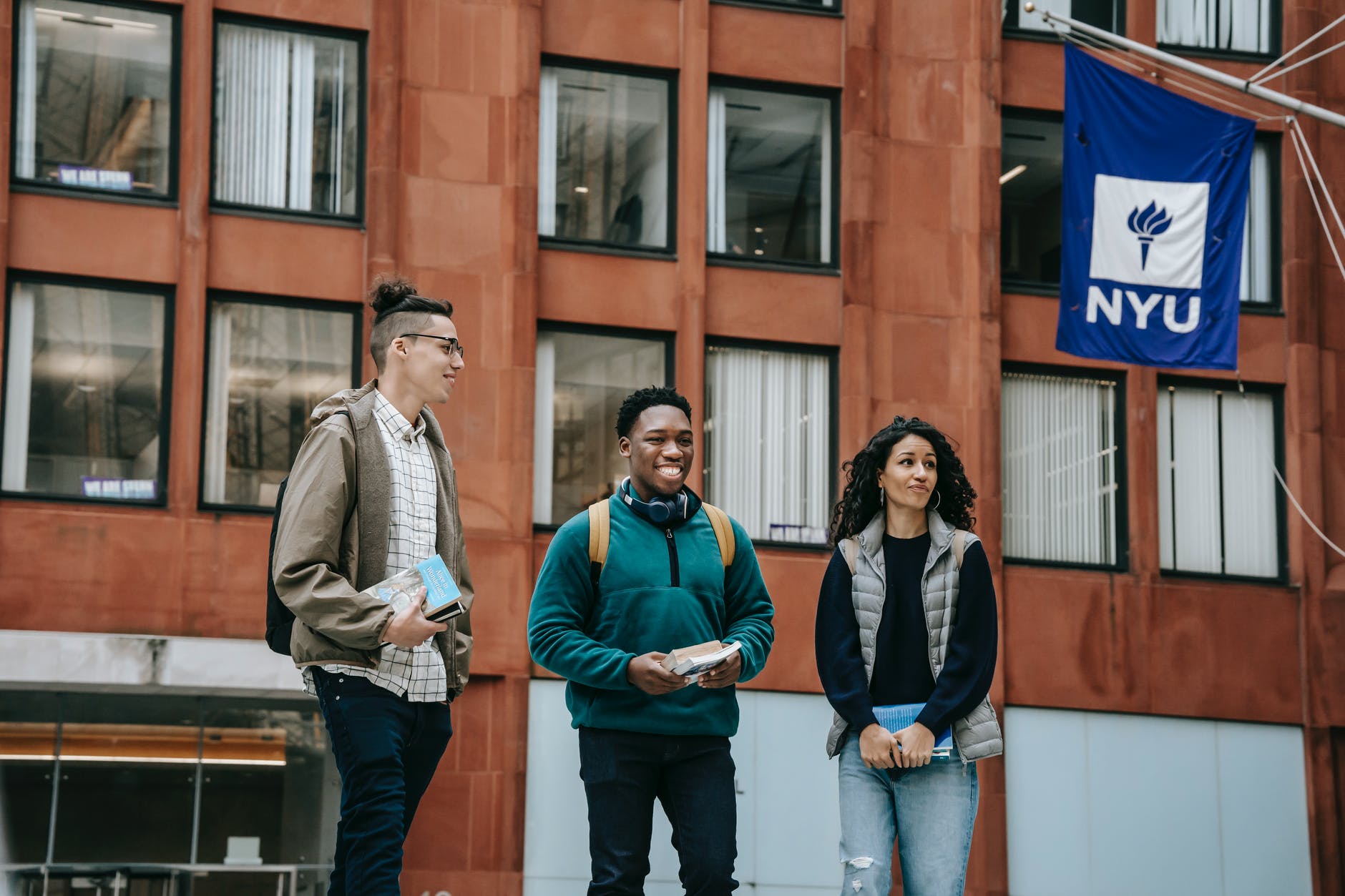
During the coronavirus pandemic, the way education is delivered to students in the United States has drastically changed. Students with disabilities are more affected than most by this change.

Students with disabilities are caught in a situation they didn’t choose. How they get their education has been altered so drastically, portions of their daily routine have become nonexistent. Related services that were part of their Individualized Education Plan (IEP) have been slashed to a minimum or eliminated. Few services can be delivered effectively by virtual means or by the student’s parents. Parents are left at home attempting to deliver services they are not trained to provide, potentially causing their student unintentional harm. For example, if parents try to assist in physical  therapy sessions, they could hurt themselves or their children because they aren’t trained in the correct techniques. There have even been instances where it seemed to the parent that the student’s impairment was totally disregarded. This left the time used for the therapy session like some sort of preliminary fact-finding mission, instead of building on progress previously made during the last session.

School officials try their best to modify plans and deliver needed services. Because the pandemic happened so quickly, they are poorly prepared to do so. Even now, more than a year into this model of learning, educators are on a continual learning curve they just can’t get ahead of, while students are left behind. It makes you wonder how this set of students going to school during such an unusual time will compensate for the gaps being left in their education in years to come.

Although students are missing their friends and the socialization aspect traditional school offers, some parents of kids with disabilities find themselves in another dilemma. The student with a disability might be at a higher risk of contracting the virus. As a result, parents feel they have no other choice but to keep students in the virtual model of learning. Parents must take extra precautions not to come into contact with the virus. There might be other risks involved with exposure to the virus. If a student contracts the virus, they could have other health complications as well. The million-dollar question becomes how do we get all our students back to school so they can receive their education and services properly, while staying safe from the virus at the same time?

In implementing any reopening plan, many factors need to be considered. First, the health of the students and how to catch them up on the material that is being missed. Students need instruction and guidance about things like social distancing, proper handwashing and most difficult of all, consistently wearing a face mask. Some individuals with a disability can’t wear a face mask for medical reasons. If that is the case for a student, an alternative plan needs to be implemented. Lastly, the health and well-being of the educators must be considered as well.

Currently educators are at the front of the line when it comes to receiving the COVID-19 vaccine. Additionally, other workers such as speech, physical and occupational therapists need to be added to that list. These workers need to be considered essential and should be prioritized. One of the goals in returning us to pre-pandemic education is to fully open schools. That can’t be done unless these support personnel whose aim is to provide related services to students with disabilities get vaccinated too. They ensure students stay focused on their education while making sure their therapeutic needs are met regularly.

These are merely a starting point of suggested guidelines to help students with disabilities get safely back to learning in the classroom. The positive steps we take to rid ourselves of the virus will give kids the opportunity to move forward and make the progress they need to confidently succeed as young adults, well-prepared for different kinds of adversity.

The Importance of the IDEA for All Students

Thinking about how far I’ve come professionally, it would be wrong not to talk about how the IDEA has helped me achieve my goals. The IDEA or Individuals with Disabilities Act is a very helpful tool for students with disabilities.

Each law related to people with disabilities is intended to give them a better opportunity to achieve their goals in life. The Individuals with Disabilities Education Act (IDEA) is no different. Before it was enacted into law in 1975, its original name was the Education for all Handicapped Children Act. This law helps students with disabilities get the education and supports they need. It helps them receive accommodations to go to school in an integrated environment with other children.

Socialization is an important part of going to school and growing up. Being included and integrated with other kids has many benefits for everyone involved. It gives students with disabilities the opportunity to get the full school experience. It allows kids without disabilities to be exposed to another person’s perspective. This interaction gives them valuable experiences at an early age. It will also influence their behavior as they get older.

While I always did well in school, I remember some things about the experience that have always stuck with me. Being mainstreamed in the 3rd grade, I had to explain my disability to other kids. Most of them were very curious to find out why I had to use a wheelchair to get around. This doesn’t mean all my school experiences were positive ones. Being exposed to students who had different reactions to my disability allowed me to be better prepared for how people might react to my disability as an adult. In my opinion, I have been able to take this point of view and use it to try and inform others about the abilities a person with disability possess. It’s been a good teacher on how to get that conversation started with people in the first place.

If it had not been for the accommodations that were given to me in my Individual Education Plan (IEP), I think school would’ve been a lot more difficult. It’s not because I didn’t know the work, but because of the limitations I had to overcome just to get the work done. Of course, I had transportation that allowed me to get to school. I have to say getting therapy in school helped me keep a regular school schedule and I didn’t have to miss any extra time to get to and from appointments. Because of the educational supports I received, college and beyond were a possibility for me. I was not only able to complete, but excelled in my studies.

Parents and students should stay up to date on what’s going on with their student’s education and related services. As part of the IEP team, they should maximize the delivery of services needed and keep up with their advocacy skills. This is an effective strategy to hold team members accountable when things aren’t going according to what is agreed upon during each meeting.

I know students with disabilities are having difficulty right now because of the pandemic. Parents and their students should be patient with themselves. Continue to sharpen and maintain their advocacy skills. This will help preserve their rights and maintain services they need now and beyond. Connecting with local advocacy and special education groups that offer webinars and other resources can also be beneficial. This will help you learn about techniques and other methods available to maximize desired educational outcomes. Advocacy groups can help if you need to find someone to go to a meeting with you or advocate on your student’s behalf. Using these tools successfully will allow a path for your student’s educational and life goals to be achieved in the future.

Teacher Assaults Autistic Boy

As parents, we expect when we send our kids to school, they’re in good hands. After seeing a story on the news earlier this week, I was completely shocked about the subject of the report. A teacher had been caught on video assaulting a student with Autism.

When I started looking into the subject a bit more, I found out that unfortunately, this wasn’t an isolated incident. I’ve posted before on how students with disabilities experience more bullying by their peers than their non-disabled counterparts. What didn’t occur to me, until now, was the possibility that maybe the person bullying the student could actually be the teacher, and not other students.

Obviously, there’s no excuse for this behavior. It’s a shame that those we entrust with our kids feel they can use their position of trust and power in such a negative way. I feel the Superintendent of the school did the right thing by firing the teacher. Although the School Board reinstated her, I’m hoping the new investigation being conducted will result in the appropriate action to protect all children at the school, especially those with a disability.

I’ve had the pleasure to volunteer my time years ago at a local Middle School and realize the majority of teachers who take on the job genuinely care about their students. Although I’m not sure how, an extra safeguard should be implemented in the education field to ensure the people entrusted with the safety and well-being of our kids on a daily basis are doing exactly that. As a result, the kids can focus on learning instead of the physical abuse their teacher might inflict on them if they misbehave.

For more information check out the following link:

http://www.wftv.com/news/news/local/9-investigates-teacher-accused-assaulting-special-/ngPHN/

Thanks for reading..

cr